The Payback Period of Remanufactured Heavy Vehicles Explained
Intro
Fleet managers use payback period as a simple, intuitive metric to judge asset investments. It answers one direct question: how long will it take for this truck to generate enough net profit to cover the money you spent buying it. Payback is different from ROI or NPV. It focuses purely on time, not the final percentage return. For remanufactured heavy vehicles, the payback timeline depends heavily on quality certification. Cheap uncertified rebuilds may look fast to pay back on paper, but hidden downtime often stretches that timeline dramatically. REMEN ROAD certified remanufactured heavy vehicles creates a more predictable payback window for fleet budgeting.
Core definition of payback period for heavy vehicles
- Payback period = Total initial capital outlay ÷ Expected annual net cash gain from the truck
- Initial capital outlay includes purchase price, delivery, registration, and pre‑purchase inspection fees.
- Net cash gain means the revenue the truck generates, minus fuel, scheduled service, insurance, tax and forecasted downtime losses.
- The result is usually expressed in months or years.
- Shorter payback is generally better, but it cannot be viewed in isolation from risk.
Payback profile of brand-new heavy trucks
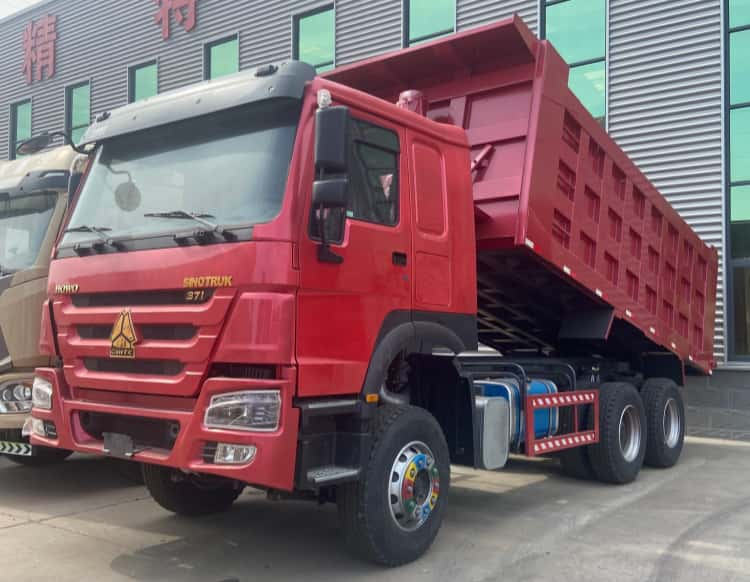
- New trucks carry a very large upfront capital cost.
- Even with steady revenue and low breakdown risk, the payback period is long.
- It often runs 4 to 6 years for heavy mining or haulage cycles.
- Early heavy depreciation also suppresses net cash flow in the first two years.
- The strength is consistency. Cash flow forecasts are reliable while the factory warranty remains active.
- This works only for fleets that plan to hold the asset for many years and accept slow payback.
Payback profile of ordinary used trucks
- The invoice price is low, so the theoretical payback looks short in spreadsheets.
- This is the common trap for fleet buyers.
- High unscheduled downtime and surprise major repairs eat into operating profit.
- Emergency towing, rental replacement and contract penalties can erase monthly gains.
- The real payback timeline becomes unpredictable.
- Sometimes a single catastrophic failure pushes payback out indefinitely, or turns the asset into a net loss.
Payback profile of certified remanufactured heavy vehicles
- Upfront capital sits between new trucks and unvetted used trucks.
- The certified remanufactured heavy vehicles’s big advantage is stable net cash flow.
- Mandatory component renewal and NDT fatigue checks reduce unexpected breakdown events.
- Warranty coverage limits out‑of‑pocket repair expense for covered failures.
- Depreciation is gentle and linear, with no sharp early‑life value drop.
- For most mining and long‑haul fleets, the typical payback window lands between 2 and 3.5 years.
- Certified remanufactured heavy vehicles creates a balanced sweet spot: faster payback than new trucks, and far less volatility than uncertified used stock.
Key variables that shift your reman payback timeline
- Daily utilisation rate: higher running hours shorten payback quickly.
- Work environment: highway haulage has lower wear than mine or quarry heavy cycles.
- Local downtime cost: sites with high production penalties extend payback if reliability drops.
- Warranty terms: policies covering labour and towing protect cash flow and shorten payback.
- Spare‑part lead time: slow supply chains stretch repair downtime and delay your break‑even point.
- Resale plan: if you sell the truck before the end of its service life, residual value can accelerate payback.
How to avoid common payback calculation mistakes?
- Do not ignore downtime cost when building your model. Many buyers only subtract fuel and scheduled maintenance, which produces an unrealistically optimistic payback number.
- Do not assume every remanufactured heavy vehicles shares the same payback curve. Certified remanufactured heavy vehicles and cosmetic patchwork rebuilds vehicles are two separate asset classes.
- Separate simple payback from discounted payback. Simple payback ignores the time value of money, which is fine for quick internal screening. Use discounted payback for formal finance approvals.
- Run sensitivity tests. Check what happens if operating hours fall, or breakdown frequency rises above your base assumption.
When payback period should be your main decision metric?
Payback works best for fleets with short and medium project cycles. Contract mining, temporary quarry work and seasonal haulage all benefit from this metric. These operators need to recover their capital quickly before the project ends. For permanent core fleet assets, payback is less important, and long‑term TCO or NPV becomes more suitable.
Final Takeaway
The payback period tells you how fast your remanufactured heavy vehicles repays its initial investment. New trucks have slow, dependable payback. Ordinary used trucks show attractive paper payback, but carry huge hidden risk.
REMEN ROAD certified remanufactured heavy vehicles delivers a practical, bounded payback timeline. It balances lower upfront capital with controlled downtime risk, making it a strong choice for fleets that want to recover their investment within a clear, predictable window.