Industrial Remanufacturing vs Recycling: Why They Are Not the Same?
Introduction
Both remanufacturing and recycling belong to circular economy strategies for end-of-life heavy trucks. They reduce waste compared with discarding vehicles directly. However, many buyers mix the two concepts and mistakenly treat them as equivalent. Recycling breaks assets down into raw materials. Industrial remanufacturing preserves the finished engineering value built into qualified cores. This article clarifies their essential differences based on the REMAN ROAD standard, helping you understand which approach delivers usable fleet assets and which recovers basic material value.
Core Purpose
- Industrial Remanufacturing The goal is lifecycle reset. It retains intact, load-bearing core structures and restores the whole assembly or vehicle back to OEM-equivalent working performance. The finished product is a functional heavy-duty asset ready for field operation.
- Recycling The goal is raw material recovery. It dismantles end-of-life trucks and components to separate steel, aluminum, copper and rubber. The output is bulk scrap material for melting and re-forming into brand-new blanks. No finished functional product is preserved.
Value Being Preserved
- Industrial Remanufacturing It saves the embedded industrial value accumulated during original manufacturing: casting, forging, heat treatment, precision machining and assembly work. These processes consume massive energy and resources.
- Recycling Most of that complex engineering value is lost. Only the intrinsic material value of metal is kept. Melting removes all prior precision processing, and manufacturers must repeat energy-intensive forming steps again.
Processing Workflow
- Industrial Remanufacturing Core screening → full disassembly → cleaning → precision inspection and NDT testing → controlled restoration + systematic wear part replacement → reassembly → system calibration → performance testing → delivery as a usable truck or component.
- Recycling Dismantling for material separation → shredding or cutting → sorting metals and non-metals → compression and transportation to smelters → melting into raw ingots. There is no performance restoration or functional testing.
Quality & Performance of Output
- Industrial Remanufacturing The reman unit has defined power, torque, safety and emission indicators matching OEM specifications. It carries formal performance validation records and standard warranty for operation.
- Recycling The output is raw scrap material. It has no fixed performance parameters, cannot be used directly as a truck or powertrain part, and requires full re-manufacturing from scratch.
Environmental Footprint
- Industrial Remanufacturing It achieves far lower carbon emissions because it avoids repeating high-energy processes such as casting and forging. Most carbon embedded in the frame, cylinder block and axle housing is retained.
- Recycling Metal recycling saves some energy versus mining virgin ore, but smelting, refining and reprocessing still consume large amounts of energy and generate emissions.
Suitable Asset Condition
- Industrial Remanufacturing Only applies to cores with sound structural integrity. Units must pass non-destructive testing and dimensional inspection. Severe fatigue, cracking or deformation disqualifies the core from reman.
- Recycling Works for nearly all end-of-life hardware, including cracked frames, fatigued housings and damaged assemblies that can no longer meet reman acceptance criteria. Recycling is the final destination when reman is no longer feasible.
Commercial Value for Fleets
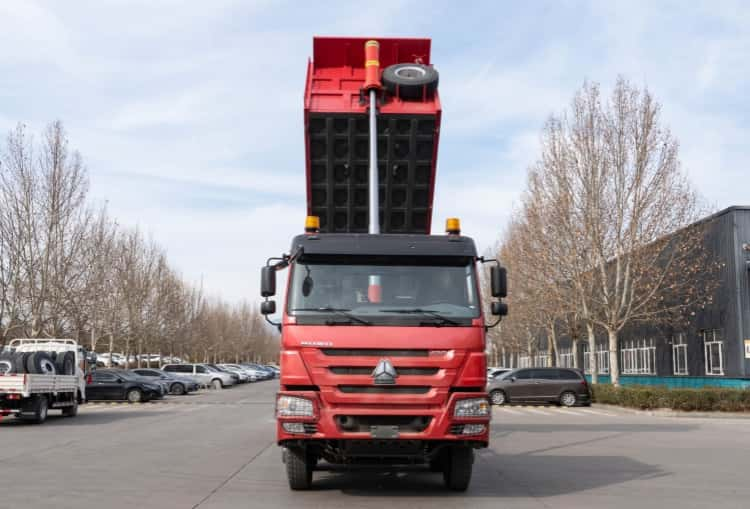
- Industrial Remanufacturing Fleets get an affordable, ready-to-operate heavy truck or component, with predictable uptime and lifecycle. It reduces capital expenditure for fleet expansion and replacement.
- Recycling Fleets only get scrap resale income, which is relatively low. It is an end-of-life disposal method, not a way to obtain usable working equipment.
How REMAN ROAD Positions the Two Paths?
Within the REMAN ROAD circular ecosystem, industrial remanufacturing sits at a higher value tier than recycling. We prioritise reman for qualified cores first. Only assets failing reman screening flow into recycling. This hierarchy follows circular economy principles: reuse and reset value before material recovery. Marketers cannot label simple scrap recycling as reman, as they create completely different outputs and value.
Closing Summary
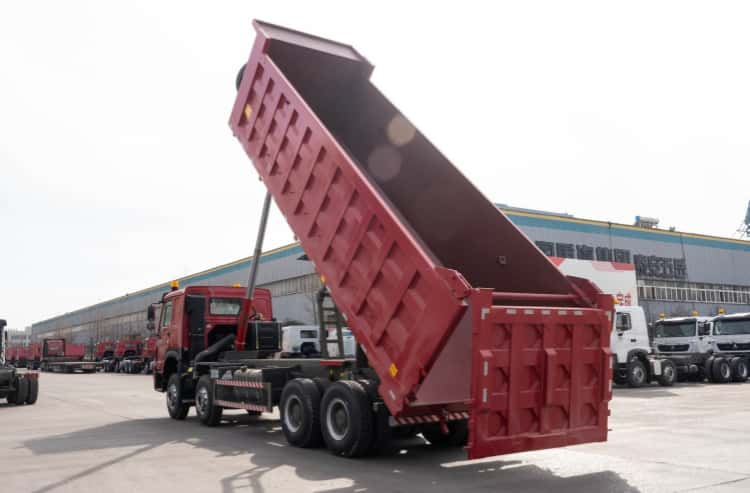
The key distinction: industrial remanufacturing saves the engineered asset and restarts its service life; recycling breaks the asset down back into raw material. Recycling is necessary for heavily damaged cores, but it cannot replace certified remanufacturing if you need reliable heavy-duty trucks and assemblies for your fleet. Always check whether a supplier’s solution delivers a performance-validated asset or merely scrap recovery.