Reman Quality: How It Is Controlled and Guaranteed?
Intro
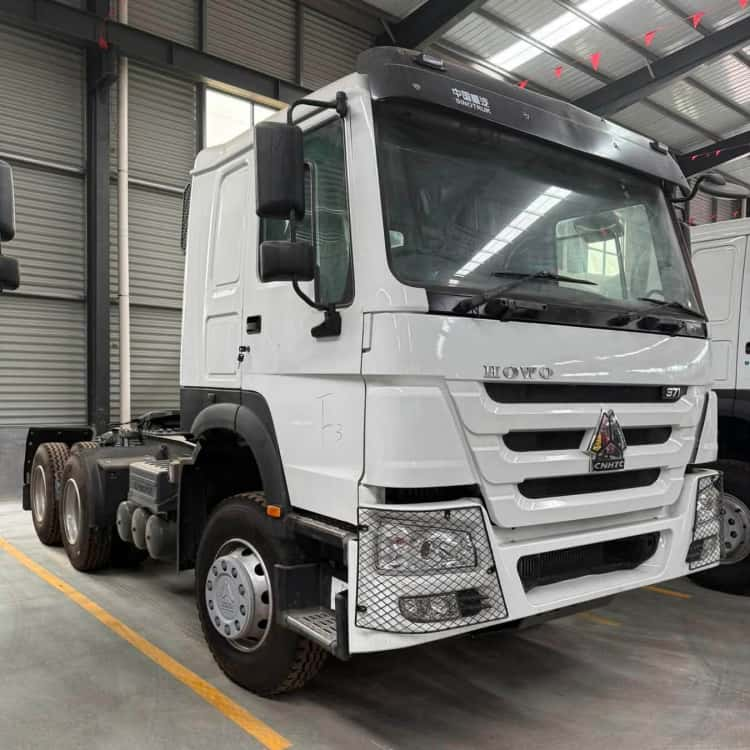
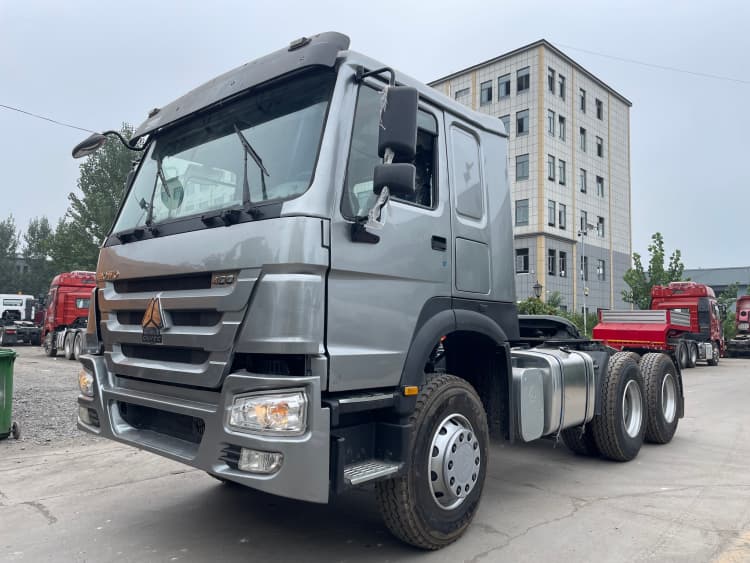
Reman quality is the core dividing line between industrial remanufacturing and casual refurbishment. Many fleet buyers hesitate to select reman trucks because they fear inconsistent workmanship and hidden defects.
Under the REMAN ROAD standard, reman quality is not controlled by workshop experience or visual checks alone. It relies on a sequential, non-negotiable quality gate system, objective testing rules, full traceability and post-delivery accountability, to reliably deliver OEM-equivalent safety and performance.
Front-end core qualification: Quality starts before disassembly
Poor cores cannot be turned into high-quality reman assets, no matter how much rework is applied. This is the first reman quality control gate.
- Each candidate core undergoes document verification, accident and overload history review, dimensional check and structural risk assessment.
- High-stress zones are scanned by mandatory NDT (UT, MPI, RT) to rule out subsurface cracks, irreversible fatigue and excessive corrosion thinning.
- Any core failing structural or material eligibility criteria is rejected immediately for scrap or parts harvesting, and never enters the remanufacturing work. This prevents unrepairable hidden risks from flowing downstream.
Full disassembly and uniform cleaning baseline
Partial teardown creates blind spots for reman quality control. Industrial remanufacturing requires complete disassembly down to individual components.
- All parts are separated, labelled and cleaned using controlled industrial processes to remove oil sludge, scale and surface corrosion.
- Cleaning also supports accurate inspection: wear, pitting, cracks and deformation that were hidden under dirt become visible.
- Cleaning records and chemical controls are standardised to avoid material damage caused by improper high-temperature or aggressive chemical stripping.
Standardised component grading rules
Every single part is judged against fixed grading criteria, with three clear outcomes: reusable, repairable, mandatory scrap.
- Reusable components must pass measurement and NDT checks and sit fully within OEM tolerance limits.
- Repairable parts are only approved when restoration methods (machining, overlay welding, heat treatment) are pre-approved and can return the part to factory specification.
- Components that hit scrap thresholds — such as cracked castings, overly worn journals or metallurgically degraded load-bearing parts — are discarded without exception. No “patch-and-reuse” shortcuts are allowed.
Process-controlled repair and restoration
Repair work is not left to technician discretion.
- Approved repair procedures define allowable machining limits, welding parameters, heat treatment requirements and surface finishing standards.
- Critical repair steps are witnessed and logged. After restoration, parts are re-measured and re-tested before they can move to assembly.
- Unapproved modifications, makeshift reinforcement or non-OEM substitute structural parts are prohibited within industrial remanufacturing .
Multi-layer testing validation (bench, system and final acceptance)
Testing provides objective proof of reman quality, rather than subjective judgment.
- Component bench testing: Engines, axles, hydraulic assemblies and brake modules run on dynamometers and pressure test rigs to verify power, torque, leakage and response thresholds.
- Pre-assembly inspection: Recovered datums, mating surfaces and clearances are verified before integration.
- Full vehicle system testing: After assembly, the whole truck is cycled under load to check interactions between powertrain, cooling, air, hydraulic and braking systems.
- Final acceptance testing produces a signed test report; units failing any threshold are sent back for rework instead of being released.
Full traceability and audit trail
Traceability is the backbone of reman quality guarantee.
- REMAN ROAD requires every core, every component, every test result and every repair action to be recorded and linked to the vehicle VIN.
- Records include NDT reports, grading sheets, bench test data, part serial numbers and technician sign-offs.
- This dossier travels with the truck. Auditors, fleet buyers and warranty teams can trace any component’s history long after delivery. It also flags recurring failure patterns for process improvement.
Independent third-party audit and certification
In-house checks alone are not enough for credible quality assurance.
- REMAN ROAD industrial remanufacturing facilities are subject to periodic third-party audits. Auditors verify that gates are actually followed, not just written on paper.
- Auditors spot-check NDT records, calibration status of test equipment, component scrap logs and dimensional reports.
- Only assets that pass the full remanufacturing work and audit requirements receive formal certification, which differentiates them from uncertified rebuilt or refurbished trucks.
Calibration control for inspection and test equipment
Test equipment itself must be reliable, otherwise test results lose validity.
- NDT probes, dynamometers, torque wrenches, micrometers and pressure gauges follow fixed calibration cycles.
- Out-of-calibration tools are locked out of production and cannot be used for inspection or acceptance testing.
- Equipment calibration certificates are retained as part of the facility’s quality system documentation.
Warranty and post-delivery feedback loop
Reman quality guarantee extends beyond the factory gate.
- Certified reliable reman truck carry standardised warranty terms tied directly to the passed inspection and test records.
- In-service failures trigger root-cause analysis: if a failure points to a process gap, core screening rules or repair standards are updated.
- This feedback loop continuously tightens the quality system and reduces repeat defects across future reman batches.
Closing
Reman quality under REMAN ROAD is controlled by a series of irreversible quality gates: qualified core intake, full disassembly, component grading, controlled restoration, multi-stage testing, traceable documentation and third-party audit. It is a system that prevents defects, rather than just catching defects at the end. For fleets, this means quality is guaranteed by engineering evidence, not marketing claims.